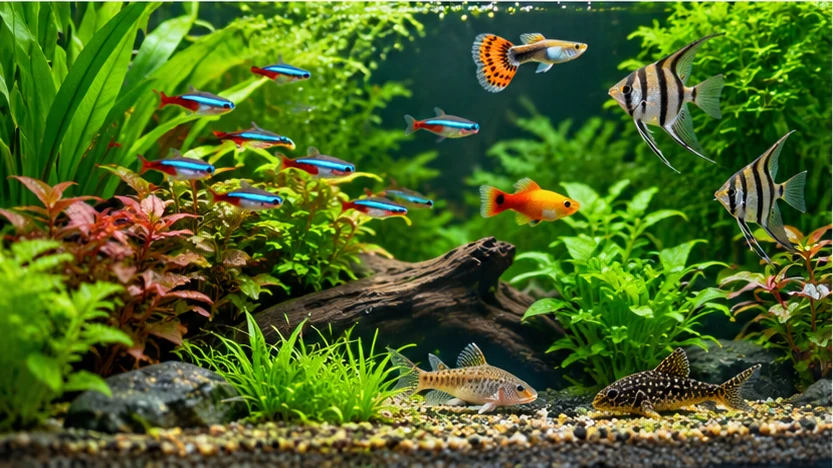
Fish do not all eat the same diet. Herbivores, omnivores, insectivores, predators, filter feeders and specialist grazers have different nutritional and feeding requirements. A generic flake may be a useful staple for some community fish but is not a complete solution for every species.
Choose the right food
- Identify the species’ natural feeding ecology and the diet recommended by reliable species-specific care information.
- Match particle size to the mouth and feeding method. Food that is too large may be ignored or cause competition; very fine food may foul water if overused.
- Use a suitable complete staple food, with appropriate variety such as frozen, live or vegetable foods where the species benefits.
- Check the nutritional needs of herbivores and grazers; algae growth in a tank may not provide adequate nutrition.
- Some specialist predators or micro-predators may not accept dry foods. Research feeding acceptance before buying the animal.
Portion and frequency
- Start with small portions and observe actual consumption. There is no single feeding frequency or amount appropriate to all species and life stages.
- Avoid leaving substantial uneaten food. Remove leftovers where practical and check that food is not trapped behind décor or in substrate.
- Growing juveniles, breeding adults and specialist species may need different schedules; use species-specific guidance.
- Do not use food as a substitute for water-quality management or attempt to make fish eat when they are showing illness or distress.
Make sure every fish eats
- Observe the whole community during feeding. Fast surface feeders can take food before shy, bottom-dwelling or nocturnal fish reach it.
- Use sinking foods or targeted feeding where appropriate, while avoiding excessive amounts that accumulate in the substrate.
- Provide food in more than one area if competition is a problem, but investigate aggression and stocking suitability too.
Storage and food safety
- Keep dry food sealed, cool and dry; avoid prolonged exposure to heat, moisture and sunlight.
- Use frozen foods according to safe storage instructions and thaw/portion hygienically. Do not refreeze thawed food unless the product instructions explicitly permit it.
- Discard food that smells rancid, has mould or has been contaminated. Check expiry and manufacturer directions.
Overfeeding warning signs
- Uneaten food, cloudy water after feeding, excessive detritus, rising nitrate or repeated ammonia problems.
- Fish becoming obese or showing abnormal body condition; body shape varies by species, so compare with reliable species references.
- Reduce portions, remove waste and recheck water quality rather than adding a chemical clarifier.
Important: Aquarium conditions and species requirements vary. Use species-specific advice and test results; these guides are educational and are not a veterinary diagnosis or a guarantee of compatibility.
Sources and further reading
← Back to the Aquarium Care Library · Open the Problem Solver A–Z