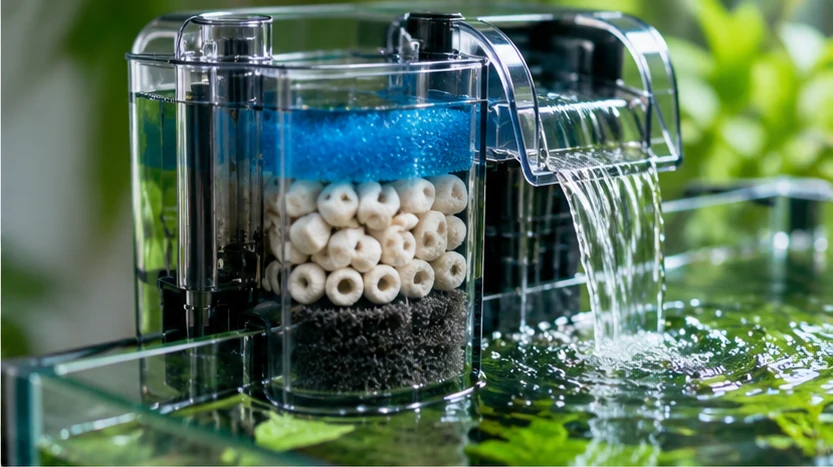
The nitrogen cycle is the biological process that makes a stocked aquarium possible. Fish and decomposing material release ammonia. Microbial communities in the filter and on other wet surfaces convert ammonia to nitrite and then nitrate. Ammonia and nitrite are toxic; a new filter does not contain a mature population of these organisms.
What the cycle does
- Ammonia is produced by fish waste, uneaten food and decaying plant or animal matter.
- Nitrifying microorganisms oxidise ammonia to nitrite. Other microorganisms then oxidise nitrite to nitrate.
- Nitrate is generally less acutely toxic than ammonia or nitrite, but it still accumulates and must be controlled through water changes, plant uptake and sensible stocking.
- The biofilter needs oxygenated water flow. A filter that is switched off, blocked or aggressively sterilised can lose performance.
Fishless cycle: practical sequence
- Set up the complete aquarium with filter running and temperature appropriate for the cycling method and future livestock.
- Use a known aquarium-safe ammonia source or a reputable aquarium maturation product. Follow its instructions and do not use household ammonia containing fragrances, surfactants or detergents.
- Measure ammonia and nitrite with a suitable test kit at regular intervals. Record dates and results rather than relying on memory.
- Allow the bacterial community to develop. Ammonia may fall while nitrite rises; later nitrite should also fall. Nitrate often increases, but tap-water nitrate, plants and water changes affect the result.
- Use the cycling method’s specified challenge or confirmation step. The key evidence is that the biofilter can process the measured input to zero ammonia and zero nitrite within the required period.
- Before stocking, perform an appropriate water change to bring nitrate and other accumulated substances into a suitable range, condition replacement water and match temperature.
How to know it is ready
- Do not use clear water, lack of smell, elapsed time or a single zero reading as proof of a mature biofilter.
- Confirm repeated zero ammonia and zero nitrite readings and successful processing of the method’s measured ammonia input.
- Check that temperature, pH and hardness are suitable for the species. Very low alkalinity can impair nitrification and allow pH instability.
- Add fish gradually. Test more frequently after each addition because the filter must adapt to the increased waste load.
Common cycle failures
- Replacing or washing all filter media at once removes much of the bacterial habitat.
- Turning the filter off for long periods deprives the biofilter of oxygenated flow.
- Overfeeding, adding too many fish at once or using medication/chemicals that damage bacteria can cause ammonia or nitrite to rise.
- A test kit can be expired, contaminated or misread. Repeat unexpected results and compare with a fresh test or trusted shop/lab where needed.
If fish are already in an uncycled tank
- This is not a shortcut to follow. Test ammonia and nitrite immediately and monitor closely; reduce feeding and seek experienced aquatic-health advice.
- Use appropriately conditioned, temperature-matched partial water changes when readings or fish distress require them. Increase aeration and keep the filter running.
- Do not add random chemicals or large amounts of bottled bacteria as a substitute for testing and water-quality control.
Important: Aquarium conditions and species requirements vary. Use species-specific advice and test results; these guides are educational and are not a veterinary diagnosis or a guarantee of compatibility.
Sources and further reading
← Back to the Aquarium Care Library · Open the Problem Solver A–Z